







The Verdict
Lucille, a young heiress in love with her riding instructor, studies and lives in a girls' boarding school in France. The arrival of some new teachers coincides with the beginning of mysterious murders that have the schoolgirls as victims.
Lucille, a young heiress in love with her riding instructor, studies and lives in a girls' boarding school in France. The arrival of some new teachers coincides with the beginning of mysterious murders that have the schoolgirls as victims.
“Nude…you die”: a title that is a real program! The clever Italian distributors, in fact, aimed for a catchy title that would directly express the two main components of the film, eros and thanatos, which were the distinguishing elements of much Italian genre cinema of the 1970s (even the working title didn’t go smoothly: “Seven virgins for the devil”). But “Nude…you die” was produced in 1967, when modesty still reigned supreme, so the nudity and death promised by the title, although present, are so chaste and innocuous as not to make even a schoolgirl blush. The frequent and prurient costume changes of the protagonists, or the showers (which are always watched by a peeping tom), are always so timid as to almost make you smile, just as the murders appear all very “soft,” always in the spirit of “I would but I can’t.”
Antonio Margheriti, also known as Anthony Dawson, directs this giallo on commission, trying to ride the wave of Bavarian films that were popular at the box offices in Italy and beyond. And indeed, it was Mario Bava who was chosen to direct “Nude…you die,” to whom the Woolner brothers, producers and distributors in America of some films by the Sanremo director, had entrusted the project. After the first ‘yes’ from Bava, who had already begun working on the screenplay entitled for the international market “Cry Nightmare,” the director of “The Mask of the Demon” declined the offer to give priority to “Diabolik” and thus the subject passed into the hands of Margheriti, who rewrote the screenplay together with Franco Bottari.
“Nude…you die” takes on many of the characteristics of Mario Bava’s cinema, with obvious debts to “The Girl Who Knew Too Much” and especially “Blood and Black Lace,” from which it takes the structure of serial murder targeting a group of young women, as well as the mysterious killer with black gloves, whose identity is revealed only at the end. The giallo mechanism, even if it does not involve its investigative part, appears quite accurate, especially if one considers the final revelation, which, although improbable in purely realistic terms, appears well thought out and in tune with all the elements scattered throughout the film.
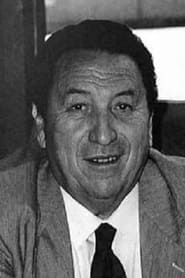
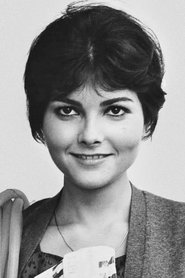
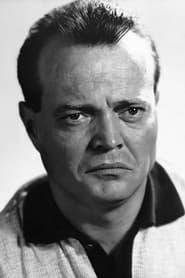
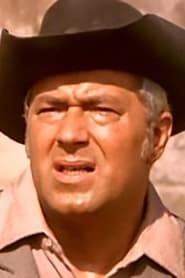
The various characters who populate the film do not all appear successful, in fact, for the most part, they are not. The protagonist Lucille is played by a somewhat underwhelming Eleonora Brown, a meteor in the cinematic landscape (she had been the child in “Two Women”) here in her last performance. Lucille is the classic girl in danger, a bit of a crybaby, who does not neglect her sentimental life to the point of getting involved with one of her teachers in a not very heartfelt love subplot. The teacher is played by Mark Damon (“The Living and the Dead”; “Black Sabbath”), probably the most stereotypical and least interesting character in the entire film; as well as the investigator played by Michael Rennie in a special appearance appears very little developed. The character on whom Margheriti seems to focus the most is Jill, the smartest girl in the group, played by Sally Smith (the TV series “The Avengers” and “Perry Mason”), a lover of detective novels who will help the police in the investigations. The frequent moments featuring Jill are also the occasion to contaminate the giallo with comedy, sometimes inserted in doses perhaps too invasive to even be damaging to the overall mystery atmosphere of the film. In a minor role, the peeping tom gardener, also appears Alan Collins, aka Luciano Pigozzi, a true fetish actor of Margheriti (he participated in over twenty films by the director).
Margheriti’s direction appears as usual extremely professional, capable of beautiful camera movements, here supported by a beautiful and suggestive photography by Fausto Zuccoli. Soundtrack by Carlo Savina, which includes the ultra-pop hit “Nightmare.”
In conclusion, “Nude…you die” is certainly not among Margheriti’s most successful films, certainly more at ease with science fiction and gothic horror, beyond an undeniable technical skill, it presents some banalities that partly undermine its success.
Suitable only for fans of vintage Italian cinema.
It deserves half a pumpkin more.
Comments
Comments (0)


Comments