






The Verdict
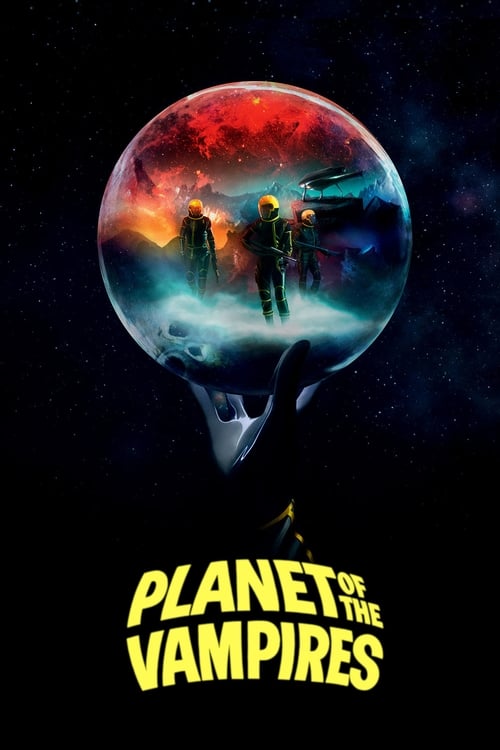
The Argos and Galiot spaceships pick up an intelligent life signal from an unknown planet and land there to verify its origin. Once on site, a mysterious force drives the crew members to fight each other, while the bodies of the fallen comrades vanish into nothingness.
The Argos and Galiot spaceships pick up an intelligent life signal from an unknown planet and land there to verify its origin. Once on site, a mysterious force drives the crew members to fight each other, while the bodies of the fallen comrades vanish into nothingness. The survivors will have to try to unravel the mystery and attempt to leave as soon as possible.
As is well known, science fiction cinema in Italy does not have what could be called a very great tradition. Few are the domestic titles of this genre that have deserved the title of cult. One of these is undoubtedly "Terror in Space," a small treasure to be rediscovered—no wonder the film was included, and presented in a beautiful restored edition, in the "Secret History of Italian Cinema" section at the Venice Film Festival 2005, followed by its DVD release.
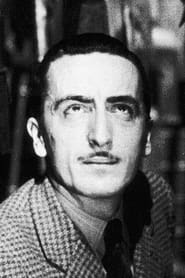
The film in question is also the only foray into the world of sci-fi by the unforgettable master Mario Bava, who once again proves himself a master, leaving an indelible mark even in this genre with his first and only attempt—a Midas of genre cinema capable of turning everything he touched into gold.
In addition, as is customary for almost all of Bava's titles, it left an important legacy for subsequent generations both in terms of cinematographic technique, capable of influencing most of his successors, and regarding the film itself, a true source of inspiration—and plagiarism, in some cases!—for countless titles in the years to come; just think of the legendary "Alien"—although both Ridley Scott, the director, and Dan O'Bannon, the screenwriter, have always claimed not to have seen Bava's film at the time (should we believe them?)—up to the more recent "Pitch Black," by David Twohy, and, above all, "Ghosts of Mars," by John Carpenter, the genre master of the generation following Bava's.
The strength of "Terror in Space" is the suggestive atmosphere that envelops the film from beginning to end, mixed with the constantly growing tension due to the mystery and related danger that the unfortunate astronauts face. To this winning mix, therefore, contribute a simple but effective screenplay, remarkable directorial finds, suggestive sets and settings, costumes and special effects, adequate music and sound effects.
The script, to which Bava himself, the writer Alberto Bevilacqua, the critic Callisto Cosulich, and the Spanish screenwriters/directors Antonio Román and Rafael J. Salvia contributed, is based on a story by Renato Pestriniero titled "A Night of 21 Hours," published at the time in "Interplanet." The basic idea is brilliant, albeit moderately influenced by famous titles such as "The Thing from Another World."
As in his entire filmography, Bava turns necessity into virtue. Meager means provide him with a new opportunity to showcase his extraordinary visual talent, his exceptional inventiveness. The film, which would be reductive to call low-budget, becomes in his hands a great title of science fiction as a whole. And so two great plastic rocks borrowed from another set at Cinecittà and moved from shot to shot become the scenario of a mysterious, threatening, and inhospitable planet. All thanks to a skillful play of shots, reflected images, a "magical" editing, illusory mattes, an intelligent continuous smoke, and a photography with very intense colors. Bava's style, characterized by slow tracking shots, long takes, and very fast zooms, has set the standard. The interiors of the spaceship are realized in a soundstage; the control panel, overflowing with colorful lights whose functions are unknown, gives that "sophisticated" and futuristic touch to the device, just as simple slightly modified diving suits and motorcycle helmets become the picturesque uniforms of the astronauts, while beams of light will serve as laser guns. The use of miniatures, both for the planet and for the exteriors of the spaceship, completes the picture.
Some ideas are innovative and memorable, such as the beautiful and unsettling scene of resurrection of simple execution—a metal trapdoor, cellophane, and an intelligent slow motion—but with a strong visual impact in representing a sort of second birth for the possessed, or the discovery of the alien spaceship with its enormous skeletons of mysterious humanoids. Makeup and special effects—mainly curated by Bava himself, with whom Carlo Rambaldi collaborated as a model maker—are of excellent quality; the wounds on the faces and bodies of the "resurrected" are well executed.
Bava, it is known, had a great passion for the creation of special effects; the director had learned much from his father Eugenio, a cinematographer, set designer, and sculptor in the early days of Italian cinema; the manipulation of images also characterized the Master from his beginnings when he had a significant experience during World War II at the Luce Institute, where he manipulated propaganda films creating fake victories of the Italian army. "Terror in Space" also marks the birth of the third generation of Bava's cinema: his son Lamberto makes his debut as the director's assistant. It is a pity that in his career Lamberto Bava will not be up to the paternal talent but will produce, for the most part, mediocre and insignificant titles.
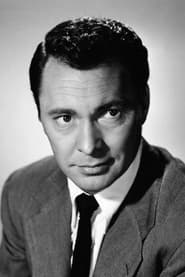
The international cast does its duty well. In the role of the protagonist, we find the American Brad Sullivan, quite convincing as the captain of the spaceship; his character is the only one with a bit of characterization, the others appear rather schematic but still functional to the story. By his side are the Brazilian Norma Bengell ("I Don't Forgive...I Kill"), the Italian Evi Marandi ("Tototruffa '62"), and the Spaniard Ángel Aranda ("The Avenger Challenges the Police"). Very peculiar was the production phase; during the shoot, each actor recited his lines in his native language, often barely understanding—or, at times, not at all—those of the other actors. All for the sake of an international release; the film was distributed, dubbed in English, also in the U.S. with the title "Planet of the Vampires" to then become, in the television version, "The Demon Planet."
Notable is the finale with a strong negative connotation as well as the "plot twist" regarding the change of destination of the spaceship; the closing line spoken by the protagonist is one to remember.
Mario Bava has made this film a must-see for fans of fantasy horror and beyond, and we are sure that those who study or are interested in cinematographic technique, perhaps not even appreciating the genre, will not be able to refrain from watching it and praising it. A film poor in means but rich in talent, with a charm that is hardly eroded. A visually powerful representation of science fiction, a cult symbol of the glory days that were—and that, alas, did not return—of our genre cinema.
Comments
Comments (0)












Comments