





The Verdict
An FBI agent is kidnapped in a snowy village in West Virginia, and at the same time, Father Joseph, a priest excommunicated for accusations of pedophilia, begins to have strange visions. The police follow the priest's directions and find human limbs buried in the ice.
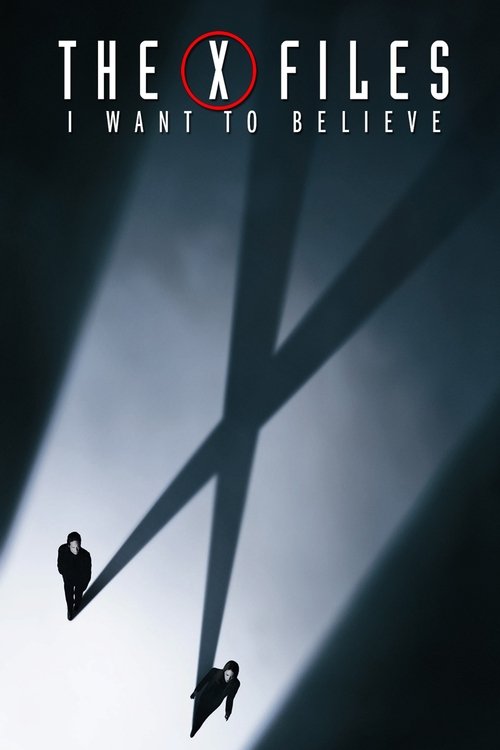
An FBI agent is kidnapped in a snowy village in West Virginia, and at the same time, Father Joseph, a priest excommunicated for accusations of pedophilia, begins to have strange visions. The police follow the priest's directions and find human limbs buried in the ice. At this point, agents Whitney and Drummy decide to use Father Joseph's abilities to find the missing agent. The case turns out to be more complicated than expected, and thus the government agency decides to contact former agents Mulder and Scully, once members of the FBI section dedicated to investigating supernatural cases: the X-Files.
Although the FBI department dedicated to the X-Files has been closed for several years for television viewers, former agents Mulder and Scully cannot stay away from trouble! And if we could understand Mulder's reasons, always fascinated/obsessed with mysteries and the supernatural, it is difficult to think that it is Dana Scully, now a surgeon of some fame and the skeptical element of the couple, who is convinced first to return to investigate an inexplicable case for human reason. It is thus that "X-Files: I Want to Believe" begins, the second feature film for the cinema of one of the most beloved series of the small screen.
In reality, few would have expected that ten years after the first film and six after the official closure of the TV series, the beloved agents Mulder and Scully would come together again and, moreover, on the big screen. Yet the tenacity of Chris Carter, the historic creator of the series, and the support of the numerous fans have allowed the X-Files to be opened one last (?) time.
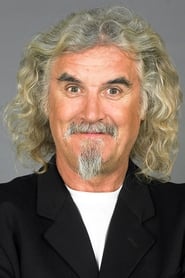
"X-Files: I Want to Believe" has a freshness that one would hardly have expected from a quasi-recycling operation, and the credit goes mainly to the good scriptwork and the excellent performance of the two leading actors. The story, written and scripted by Frank Spotnitz (a long television career including "X-Files" and "Millennium") and Chris Carter himself, does not explore the mysteries of the universe and government conspiracies that the two protagonists were used to confronting in the TV series, but deals with a more realistic (as much as the word is adaptable to the X-Files universe) and certainly more current theme. Carter and Spotnitz decide to delve into the world of clandestine organ trafficking, continuously misleading the viewer with false leads that lead to a final solution that is incredible, perhaps a bit implausible, but remains surely effective, especially for lovers of surgical horror. The supernatural element is ensured by the presence of Father Joseph and his sensitive abilities, a character who has great importance in the narration of this film and a beautiful characterization. Father Joseph, played by a good Billy Connolly ("Timeline"; "Fido"), is the "disturbing" element par excellence, capable of shaking the minds of the small mountain community in which he lives because of his terrible past as a pedophile and capable of conceptually dividing the beliefs of Mulder and Scully. At the same time, Father Joseph is a synonym for hope: hope for the police and the entire community that trusts him for the recovery of the missing women; hope for Scully as an element of identification and a symbol of lost and perhaps found faith; hope for himself in redemption from the sins committed. A tragic and "uncomfortable" figure, metaphorically connected to all the facts and characters involved in the affair.
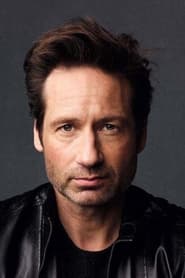
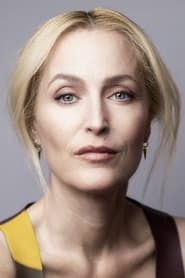
Fox Mulder and Dana Scully, always excellently portrayed by the reunited David Duchovny and Gillian Anderson, reach levels of characterization unusual for a genre film. Certainly strong from a long past of psychological in-depth studies and evolutions offered by the long television stay, the two former FBI agents appear here as individuals now distant from their past, eager to forget forever the joys and especially the pains that the X-Files have caused them. Mulder appears cynical and curious as usual, apparently immune to the numerous open and yet never healed wounds that continue to torment him. His colleague Scully, now a surgeon, enjoys a more complex writing and is described as a more vulnerable and emotional person, deeply marked by the events and in conflict with her own faith. Indeed, it is her relationship with faith that represents a crucial point of the narration, expressed by the internal conflict between her desire for moral redemption, catalyzed by the rescue mission of the sick child, and her hatred for the cruelty of fate. To emphasize this search for faith, there is then the repulsion towards Father Joseph, a divine emissary capable of immoral acts on his choirboys, but at the same time the only person able to lead her to a moral balance through confrontation.
It should be noted that the return of "X-Files" is not exactly all roses and flowers. The close link that exists between this film and the TV saga will probably make it less accessible to those unfamiliar with the TV episodes, due to the too many references taken for granted and the complex personalities of the characters that are a clear reflection of years and years of character developments. Even the pace, despite the engaging story, is not the most fluid, while the ending seems a bit too rushed.
The impression, in the end, is that "X-Files: I Want to Believe" is an episode discarded from the TV series and now recovered and pumped up for a cinematic release. The fact is that it is still an episode of great quality!
A must for nostalgic fans of the TV series, enjoyable but perhaps sometimes a bit difficult for everyone else.
Comments
Comments (0)










Comments