The Name of the Rose backdrop
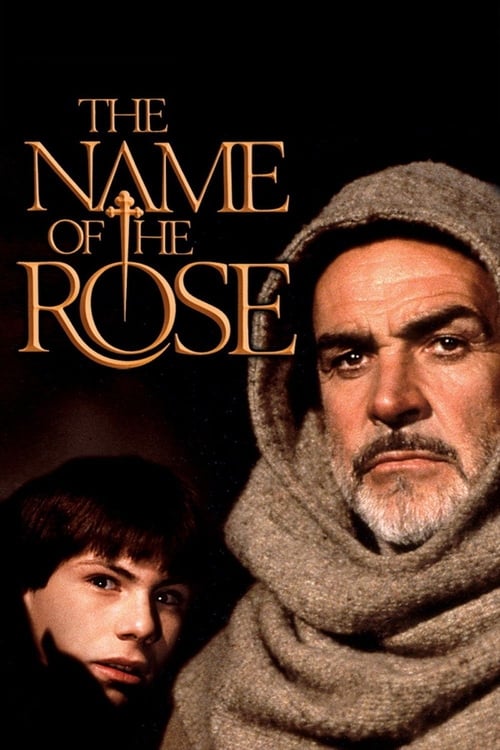
The Name of the Rose poster

THE NAME OF THE ROSE

1986 FR HMDB
September 24, 1986

14th-century Franciscan monk William of Baskerville and his young novice arrive at a conference to find that several monks have been murdered under mysterious circumstances. To solve the crimes, William must rise up against the Church's authority and fight the shadowy conspiracy of monastery monks using only his intelligence; which is considerable.

Cast

👍 👎 🔥 🧻 👑

Comments

Comments (0)

Crew

Production: Thomas Schühly (Executive Producer)Alexandre Mnouchkine (Producer)Jake Eberts (Executive Producer)Bernd Eichinger (Producer)Franco Cristaldi (Producer)Bernd Schaefers (Producer)
Screenplay: Gérard Brach (Screenplay)Andrew Birkin (Screenplay)Alain Godard (Screenplay)Howard Franklin (Screenplay)
Music: James Horner (Original Music Composer)
Cinematography: Tonino Delli Colli (Director of Photography)

REVIEWS (1)

As Chianese
Taken from the famous best-seller by Umberto Eco, this film is the result of the initiative of producer Franco Cristaldi who hits the mark by entrusting the direction, with a considerable budget, to a true expert in the field: the Frenchman Jean-Jacques Annaud ("The Bear", "The Enemy at the Gates"). In the Middle Ages, in an abbey in northern Italy, a meeting is taking place between some Jesuit monks and the representatives of the Pope to solve the problem of the Pope's temporal goods. Among the guests is Guglielmo da Baskerville (a great Sean Connery), a monk who has dedicated his life to study and who has a past as a member of the Holy Inquisition. Meanwhile, in the abbey, strange and horrid crimes are being committed, the hand is always the same... that of a murderer who is inspired by the seven trumpets of the Apocalypse to slaughter anyone who comes into contact with a cursed book, jealously preserved in the vast library of the abbey. Guglielmo da Baskerville and the novice Adso Da Melk (a young Christian Slater) begin to investigate... Directed excellently by the skilled Annaud, this film features the presence of excellent actors, including, in addition to the already mentioned Connery and Slater, the sadistic Federick Murray Abraham as the inquisitor Bernardo Guy, Fedor Chaliapin Jr. the Varelli of Argento's "Inferno" and the sexy Valentina Vargas. Some negative notes only regarding the screenplay, written by four different authors: Brach, Birkin, A. Goddard, and Franklin: it focuses more on the mystery than on the ironic philosophical musings that are classic of Eco's writing style. But otherwise, cinematographically speaking, they do their job very well, the production designer Dante Ferretti and the photographer Tonino Delli Colli (his work for the film earned him the David di Donatello). In short, an excellent film that does not disappoint fans of mystery nor those who loved the book; definitely worth watching.
👍 👎 🔥 🧻 👑

Comments

Comments (0)

COMMUNITY REVIEWS (5)

Gimly

Gimly

6 /10

At first I was like "Hah, this is some kind of Sherlock Holmes but a priest thing!", and then I was like "Oh, this is some kind of Sherlock Holmes but a priest thing!"

Final rating:★★★ - I liked it. Would personally recommend you give it a go.

John Chard

John Chard

5 /10

Bookish or Boorish?

The Name of the Rose is directed by Jean-Jacques Annaud and based on the novel of the same name written by Umberto Eco. It stars Sean Connery, Christian Slater, F. Murray Abraham, Helmut Qualtinger, Elya Baskin & Michael Lonsdale. Music is scored by James Horner and cinematography by Tonino Delli Colli.

Sean does Sherlock the Monk.

It's one of those film's that I just can't get into, three times I have tried but it's now consigned to the recycle bin, never to be unearthed again. I see there is great artistry there, it's very literate and the mystery element is strong, but it saps my strength to the very last. Connery is miscast because he plays it as nudge nudge wink wink detective fare, and film strains too hard to be some intellectual medieval musing on inquisitional power, berserker religion and the search for truth. Now I like gloomy moods, especially when part of some Gothic architecture, but even with the delightful weirdness of this monastery and the even weirder haircuts, I find it hard to sit still, such is the haphazard directing of the plot. In all honesty, the makers really would have been better off just making another Sherlock Holmes movie and setting it in a monastery. Now that would be fun...

This wants to be a paean to Arthur Conan Doyle, a brain teaser and an observation on some tricky subjects, but the mix doesn't work, sadly, for me anyway. Because I don't like it doesn't mean it's a bad film, clearly it is loved by many and has things of value to a discerning viewer. But to me, no, leaves me cold and frustrated. 5/10

Wuchak

Wuchak

6 /10

Murder mystery at a gloomy abbey during the Dark Ages with Sean Connery

In 1327, a Franciscan monk and his pupil (Connery and Christian Slater) arrive at a monastery in northern Italy to attend an important theological Roman Church conference. When monks are found dead in mysterious ways, William (Connery) winds up being the Medieval version of Sherlock Holmes. While he seems to figure the mystery out due to the evidence, a mirthless inquisitor is called in and sees things differently (F. Murray Abraham). Ron Perlman plays a hunchback and Michael Lonsdale the Abbot.

Based on Umberto Eco’s 1980 book, “The Name of the Rose” (1986) is outstanding as far as locations, sets, costumes and make-up go. Anyone interested in a shadowy drama with the dreary Gothic ambiance of the Middle Ages, this is the film to see. It’s helped by Connery’s towering performance, marked by his nonchalant confidence. Slater is also excellent as the inquisitive novice. Meanwhile Valentina Vargas as the feral peasant girl is yet another highlight (there’s some nudity, just a heads up).

The murder mystery is decent enough and there are interesting theological debates, but this is mostly a commentary on the good, the bad and the ugly of Medieval Catholicism. Remember, there was good reason for the Protestant Reformation that started less than 200 years later. I advise using the subtitles, as this is a dialogue-driven piece filled with mumbled Latin words and unusual names; it will help you understand the convoluted goings-on.

Speaking of which, the film seems weighed down and needed a rewrite to make the story more compelling. Yet it’s still well worth checking out for those interested and it influenced many movies, like “Robin Hood, Prince of Thieves” (1991). Fans of "Black Death" (2010) should appreciate it, although it’s not on that level of greatness; the contemporaneous “Season of the Witch” too. Those films, however, are more conventionally entertaining. This one’s more along the weighty lines of “The Bridge of San Luis Rey" (2004), which most people hated, but I appreciated.

The flick runs 2 hours, 11 minutes, and was shot at a replica of the monastery on a hilltop outside Rome (exteriors and some interiors) while most interiors were done at Eberbach Abbey, Germany, over 700 miles to the north; the mountain scenes were shot nearby in Taunus Mountains, Hessen, Germany.

GRADE: B-

CinemaSerf

CinemaSerf

7 /10

Recently I saw a restored version of "The Black Pirate" - made in 1926 and that was in far better condition that the print I saw of this 1986 iteration of the cracking Umberto Eco novel. Set amidst the fear that beset the Christian world during the Holy Inquisition, we find ourselves at a remote abbey run by Michael Lonsdale. There is to be a gathering to facilitate a theological debate between the Franciscans and the Vatican. To that end, "William of Baskerville" (Sean Connery) and his novice "Adso" (Christian Slater) have travelled to this rather bleak location. Their arrival is tainted with sadness and mystery, though: a young monk has mysteriously died. "Baskerville" asks permission to look into it and is soon inveigled in a complex investigation that is proving distinctly perilous for almost all at this abbey. What is the secret? Can they deduce that before the arrival of the dreaded "Bernardo Gui" (F. Murray Abraham), the powerful instrument of the church who thinks nothing of burnings at the stake? This is a great story of medieval intrigue that is well enhanced here by a strong supporting cast - notably an almost unrecognisable Ron Perlman as "Salvatore"; Feodor Chaliapin Jr. is really quite intimidating as the Venerable "Jorge" and Michael Habeck's "Brother Berengar" has something creepy and distinctly un-Christian about him. As the story progresses we realise that this is actually a story about not just fear of the Inquisitors - but of the very power of the written word. Of the power of education and enlightenment - and the lengths some will go to keep the poor - potently exemplified here by Valentina Vargas - in their place. The cinematography of this dark, cold and unforgiving place adds richness and a malevolence to this film that really does resonates an effective eeriness - an evil, almost. Connery and Slater? Well perhaps not my first choice here - but they are not terrible and the former does bring a little gravitas to the role that just about works. Given all the dross that's getting 4K upgrades these days, surely this one has to merit a bit of TLC.

misubisu

misubisu

10 /10

The Name of the Rose (1986) Review: A Perfect, Pitch-Black Gothic Masterpiece

Jean-Jacques Annaud's The Name of the Rose is not merely a film; it is an atmosphere, a puzzle box, a philosophical war waged in the shadowy corridors of a decaying abbey. It is a perfect alchemy of intellectual thriller and gothic horror, and decades after its release, it remains an untouchable classic—a film that earns every minute of its runtime and deserves nothing less than a perfect score.

A Labyrinth of Stone and Sin

The premise is deceptively simple: the year is 1327. Franciscan monk William of Baskerville (Sean Connery) and his novice Adso (a young Christian Slater) arrive at a remote Benedictine abbey for a theological disputation. Instead, they find a series of gruesome, inexplicable deaths that the superstitious monks believe are the work of the Devil. William, a man of reason and logic far ahead of his time, must use his deductive powers to uncover the truth before the Inquisition arrives to burn it—and anyone nearby—at the stake.

The abbey itself is the first great character of the film. A monolithic, claustrophobic maze of staircases, scriptoriums, and shadowy recesses, it is a character in its own right. The cinematography is a masterclass in gloom, using natural light from torches and windows to paint a world literally and metaphorically emerging from the Dark Ages. The sense of dread is palpable, a chilling mist that seeps from the stone walls.

The Unforgettable Performances

Sean Connery is, quite simply, iconic. He sheds his James Bond persona completely to become William of Baskerville—a man of wry wit, profound intelligence, and a deep-seated weariness with human folly. His performance is the film's brilliant, logical heart. Opposite him, F. Murray Abraham delivers a chilling, Oscar-worthy performance as the Grand Inquisitor, Bernardo Gui. Their confrontations are not physical battles but electrifying duels of ideology and intellect.

But beyond the two titans at its centre, the film is populated by a gallery of unforgettable faces, two of which leave an indelible mark.

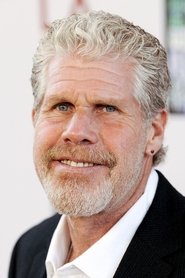
Ron Perlman as Salvatore: In a film full of brilliant casting, Ron Perlman's performance is a standout. Under some of the most convincing and grotesque prosthetic makeup of the era, Perlman completely vanishes into the role of the deformed, simple-minded cellarer's assistant. He is a creature of grunts and fractured, multi-lingual speech, a living embodiment of the era's poverty and superstition. Yet Perlman infuses him with a pathetic, almost childlike humanity. You fear him, you pity him, and you cannot take your eyes off him. It is a physical and vocal performance of astonishing commitment that adds a crucial layer of visceral, earthly grime to the film's high-minded intrigue.

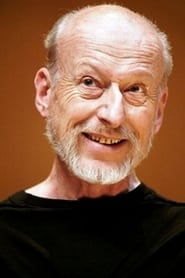
Feodor Chaliapin Jr. as Jorge de Burgos: If Salvatore represents the body's decay, Jorge de Burgos represents the mind's corruption. Played with terrifying, serene authority by Feodor Chaliapin Jr., the blind, ancient librarian is one of cinema's greatest and most understated villains. Chaliapin, with his clouded eyes and voice like crumbling parchment, is utterly mesmerizing. He is a monument to dogma, a man so convinced of his own righteousness that he is willing to commit any sin to protect it. His final scenes in the labyrinthine library are some of the most tense and philosophically charged in film history. He is not a cackling monster, but a calm, intelligent, and truly terrifying force of anti-knowledge.

The Verdict: A Timeless Classic

10 out of 10 - A Flawless Gothic Tapestry

The Name of the Rose is a rare film that satisfies on every level. It is a gripping detective story, a profound historical drama, a chilling horror, and a biting satire of religious hypocrisy—all woven together with impeccable craft. The direction is assured, the script is intelligent and witty, and the atmosphere is thick enough to taste.

It is a film that respects its audience, trusting them to follow its complex mystery and weighty themes. And at the heart of its dark, magnificent tapestry are performances—from the legendary leads to the unforgettable character actors like Ron Perlman and Feodor Chaliapin Jr.—that are etched in memory forever. It is, and will likely remain, perfect.

Reviews provided by TMDB