




The Verdict
Paris. Night.
Paris. Night. A woman driving a 2CV is transporting someone in the back seat. She is uncomfortable, keeps looking in the rearview mirror, as if worried about the other cars. She stops on the bank of the Seine, takes what we discover is a corpse from the back seat and throws it into the river. Just as she arrived, she leaves.
The authorities find the person in the river the next day. It is a girl with a disfigured face, a distinctive trait for identifying the body. The girl is the daughter of a medical luminary, Dr. Genessier, who years earlier had been responsible for the car accident that caused irreparable damage to the girl's face.
After identifying the corpse of his daughter, the doctor returns home and tells the girl with the disfigured face, who lives imprisoned in her room, that perhaps now there is hope.
From the beginning, in cinema and literature (but especially in reality, of which books and films are a metaphorical mirror), Man has sought to counter the inevitable course of events. Fate is sometimes benevolent and leads Man along a serene life. Other times, it is cruel and causes situations that are irreparable, irreversible. The Common Man has never been able to do anything but observe helplessly the course of events and, in the face of a mockery of fate, such as death, remain in silence and suffer. But there is a type of Man who does not accept these tricks of fate. This man does not succumb before death but reacts. This is the Man of Science. Just as Dr. Frankenstein could not accept that a dead body remained so and would have done anything to prove that his theories were correct, Dr. Genessier cannot find peace. He must apply his knowledge to counter fate.
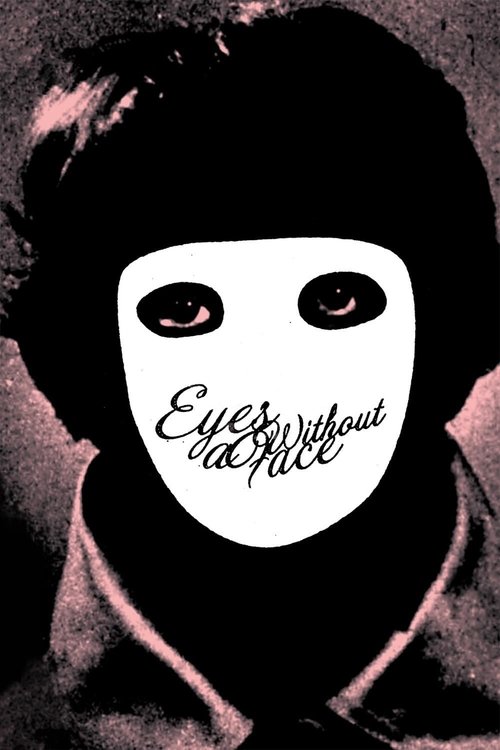
This fanta-philosophical introduction to a small gem from 1960, "Eyes Without a Face," directed by French director Georges Franju, did not have the deserved success when it was released.
It certainly made people talk. It is a horror with strong dramatic tones, a precursor of the entire "mad doctors" surgical genre. In front of a film like "The Skin I Live In" by Pedro Almodovar, one cannot help but go back to the distant 1960s and compare the vengeful Banderas with the austere Brasseur. Different motivations (revenge against remorse/ambition) but a very similar story. In both cases, we have desperate doctors who counter the forces of nature with their knowledge, with alternating but overall always disastrous results. Because Nature wins over everything.
The protagonists of "Eyes Without a Face" are three and represent three very distinct figures.
The figure of the doctor is ambition and the torment that derives from the failure to achieve his plans. A luminary of surgery puts his knowledge at the disposal of the disfigured face of his daughter and for whom he is willing to do anything to give her a face back. But not so much for the girl's happiness, but for the craving to achieve the predetermined goal.
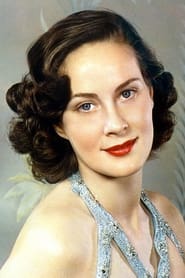
His assistant, played by the legendary Alida Valli, represents absolute devotion. The doctor in the past restored a face to her, and now she is willing to do anything to repay him. Although the doctor's intentions go far beyond the law, Louise will always be faithful to him and also represents the key to the realization of the intentions, putting her own life at risk for the doctor's cause.
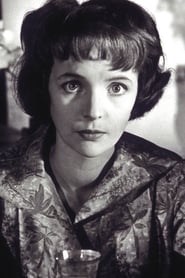
The third figure is sadness and is naturally represented by the young disfigured Christiane, who spends her days crying with what remains of her face hidden in the pillows of the bed or covered by a mask. Emblematic is the scene in which, in front of a new perfect face, the girl cannot smile except on her father's orders. And when she overdoes it with the smile, the man warns her saying "not too much," a preventive warning for her new face but in reality is a clear declaration of the pain that she feels and will always feel.
A good film that presents very slow rhythms, sometimes too much for the modern viewer, with some script passages that are not credible, but masterfully illuminated by a black-and-white photography that remains impressive. Despite the dating of the work being felt, one remains very satisfied in front of the scene of the operation, even today. It is so well done and daring that it could disturb the most delicate souls. At the time, the film had trouble with censorship, also due to people who fainted in the theater during the screening.
It is not a perfect film like some of its contemporaries, but it is still a pessimistic and gothic gem (especially in the final scene with the white doves, of great visual impact) that every lover of the Seventh Art should see and know.
The white mask that Christiane wears to conceal her disfigured face is a must of cinema. Everyone knows it exists but few know which film it comes from.
Comments
Comments (0)









Comments