















The Verdict
Fantasy and science fiction cinema have long used the environment as a mirror of contemporary fears.
Fantasy and science fiction cinema have long used the environment as a mirror of contemporary fears. In the 1970s, as ecological concerns became increasingly urgent, environmental disaster entered the fantastical imagination as a consequence of human arrogance; before that, radiation from nuclear tests and atomic bombs had already conjured scenarios where nature, transformed by human intervention, could become humanity's most terrifying enemy. Today that fear has taken on a distinctly climate-driven dimension, tied to global warming and the progressive disruption of planetary equilibrium. And it is precisely from water—an element essential to life yet a natural force impossible to control—that The Last House begins, a Netflix production directed by Louis Leterrier and written by Matthew Robinson.
It is no accident that the film opens with a quote attributed to Arthur C. Clarke: "How inappropriate to call this planet Earth when it is clearly Ocean." The phrase, cited in scientific publications and attributed to Clarke since at least 1990, perfectly encapsulates the film's conceptual starting point: we call the planet we inhabit "Earth," yet approximately 71% of its surface is covered by water. In The Last House, water itself reclaims a central role, almost a position of dominance that humanity has for too long ignored.
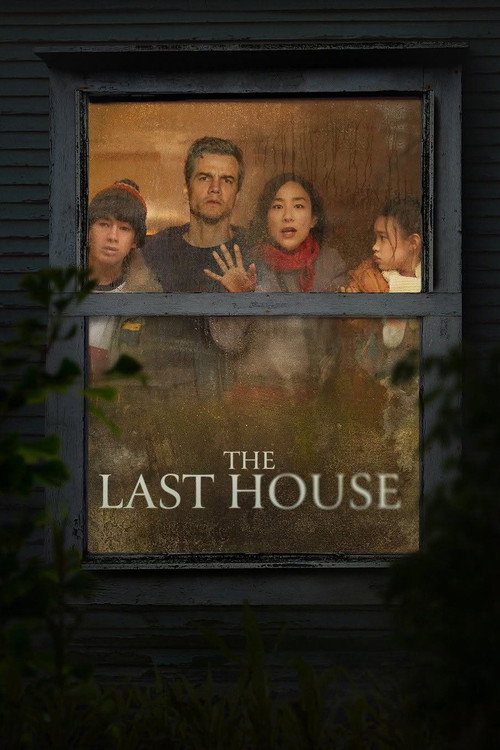
Engineer Jason Delgado prepares to spend Christmas with his wife and two children. One morning, as the family prepares to leave and buy a new Christmas tree, a violent storm makes it impossible to leave the house. Doors and windows seem locked by an invisible force, and even breaking the glass proves futile. Soon the Delgados discover the same thing is happening to their neighbors and, based on fragmented information they manage to gather, to the entire neighborhood, the city, and perhaps the entire world. Cut off from internet, phones, television, and radio, days stretch into weeks and weeks into months, while the family must ration their supplies and above all find ways to maintain their sanity. It is young Ruth, however, who senses that the relentless rain might be something more than a simple weather phenomenon: it seems almost alive, capable of communicating with them. And in the garden and streets, creatures begin to appear that may have a vested interest in keeping humans confined.
The first half of The Last House works primarily because Leterrier understands that depicting an extreme situation doesn't require grand spectacle. The film constructs its horror through the repetition of everyday life, transforming mundane actions into small dramatic moments: eating, passing time, finding something to watch, trying to maintain a semblance of normalcy. It's impossible not to think of the 2020 lockdown, those months when home became simultaneously refuge and prison, while the outside world seemed distant and threatening. The Last House taps into that collective memory without making it explicit, telling the story of a family forced to reinvent their routines and rediscover technologies that seemed to belong to another era, from DVDs to vinyl records.
The paradox is that this part—potentially the most compelling—remains the least developed. The forced cohabitation should be the film's dramatic heart, but the relationships between family members never reach the nuance such a situation could have generated. What's missing above all are genuine conflicts, daily tensions, the small emotional explosions that such prolonged confinement would inevitably produce. Given the children's ages, the family appears almost too disciplined and functional, as if constructed to represent the ideal of a "family under pressure" rather than behaving like an actual family in that predicament.
Yet the atmosphere is remarkable. Leterrier masterfully exploits the spaces of the house, transforming windows, doors, and hallways into impassable boundaries and making rain a constant presence, almost a character. The film suggests far more than it shows, and when it does let something seep through from the outside, it generates genuine unease.
When the second half of The Last House gradually abandons family drama for the more explicit contours of horror, strange amphibious creatures emerge that seem drawn directly from Lovecraftian imagination. References to Dagon and especially The Shadow over Innsmouth are evident: aquatic beings that seem to belong to another world and observe humanity as an alien species. This shift reinvigorates the film visually, but simultaneously exposes its narrative limitations. The creatures are unsettling, but their behavior soon becomes contradictory; we sense what they want, but don't fully understand why they act as they do. And when explanation finally arrives, the film seems eager to move on.
The extended underwater sequence, by contrast, is striking—probably the film's most visually accomplished moment. It's when Leterrier brings his characters beneath the water's surface that The Last House finally seems to find its fullest expression, transforming the natural element that has represented an invisible threat throughout into a physical space to explore. It's a shame that the revelation this sequence leads to proves less effective than the buildup preceding it.
Two exceptional performances sustain the film nonetheless. Wagner Moura, Oscar-nominated for The Secret Agent, brings physicality and credibility to Jason that grounds the family drama in reality, while Greta Lee, fresh from Past Lives and starring in Tron: Ares, delivers an intense and measured performance, managing to give depth to a character the screenplay could have developed further.
The Last House, then, is a film that begins with a fascinating idea and a far from trivial metaphor: humanity forced to remain confined while water—an element it has always considered a resource to exploit—seems to reclaim its rightful place. Leterrier builds the isolation effectively, works skillfully with the environment, and delivers some genuinely unsettling moments, but Matthew Robinson fails to fully develop the richness of the premise. The result is an interesting and occasionally evocative work that could have been far more powerful had it dared to dig deeper into its characters and the implications of its environmental subtext. A decent sci-fi horror, in other words, but above all a missed opportunity.
Comments
Comments (0)





Comments