







The Verdict
Chris Cleek goes hunting in the woods and encounters a woman who roams among the trees like an animal. Mr.
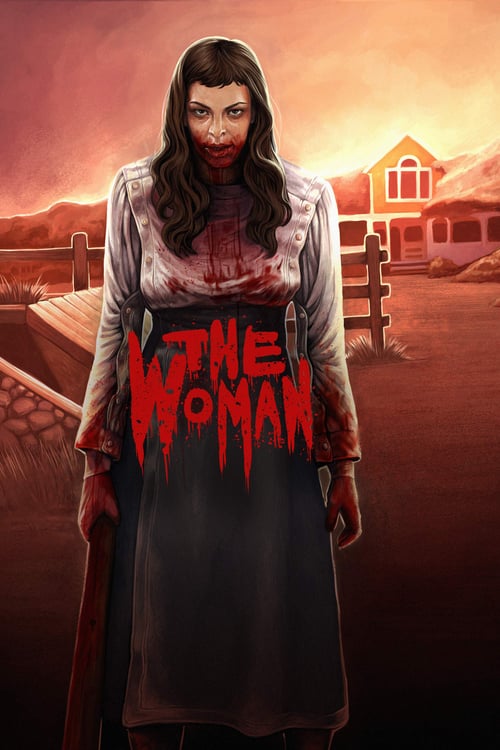
Chris Cleek goes hunting in the woods and encounters a woman who roams among the trees like an animal. Mr. Cleek captures the woman and brings her home, cleans her up, chains her in the basement, and feeds her, just as if she were a dog. The Cleek family remains almost indifferent to Chris's "trophy" and continues to live their lives as if nothing were wrong. The situation, however, begins to deteriorate: Chris rapes the wild woman, his teenage son Brian starts developing a morbid attraction to the prisoner, his sister Peggy has obvious problems with her peers and school, until a visit by Peggy's teacher to the Cleek home causes the situation to escalate.
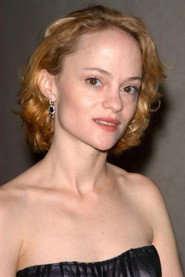
Lucky McKee is a consistent and absolutely personal author, linked in a splendidly authorial way to a feminist horror that would be interesting to analyze. So out of time and the logics that drive Hollywood genre cinema, the Californian director began his feature film career with the splendid "May," a tender story of loneliness and diversity that gradually turns into madness. The protagonist is a woman - the magnificent Angela Bettis, who will often return to work with McKee - a tormented soul searching for her place in a world that clearly does not understand her and ghettos her until she becomes a monster for whom it is impossible not to feel empathy. The next step is "The Woods," the most mainstream film in McKee's career - and not surprisingly the least successful - and also an entirely female parable on the dynamics of women's integration into society, complete with witches and curses. After "Sick Girl - Malignant Creature," one of the most successful episodes of the first season of the series "Masters of Horror," also dedicated to the female universe with a story of sapphic love, McKee takes a break with "Red," a story of friendship between man and animal derived from a novel by Jack Ketchum. But the thread that ties all of McKee's works together is not broken, because it is from Ketchum that the director's next film, "The Woman," derives, which returns to speaking of women in a controversial way that has not failed to stir up rather sterile polemics - in the opinion of the writer - on the occasion of the film's presentation at the Sundance Film Festival 2011.
"The Woman" is a hard film, this must be made clear, not so much for the scenes of visual violence that are nevertheless abundantly present, but for the ambiguity of the theme in which the film bathes. McKee, who scripts "The Woman" together with the author of the novel from which it is adapted, possesses an anomalous linguistic rigor that drives him to speak by denying his own words. Therefore, a deeply feminist film that shows violence against women with the language of the genre film. This has been interpreted by many as a misogynistic spirit, ignoring both the background of the author and the rather evident message that the film conveys, which instead suggests the exact opposite. "The Woman," starting with the title itself, places the woman herself as the undisputed protagonist, who is in fact the true deus ex machina of the entire story. The wild woman triggers the action and is a symbol of a veracity, of a holistic essentiality of the feminine that influences every dynamic of the story. The woman is predator and prey, but in any case has the power to exercise her dominion over man, a dominion of a sexual nature or simply linked to tenacity and paradoxically to physical strength. In McKee's film, it is not only the wild girl who represents the female gender, but a series of other fundamental characters who create an ideal and varied female unity. There is the mother of the family - Angela Bettis, of course - who represents the spirit of endurance, the ideal victim of male mistreatment, then the sweetest youngest daughter, who is the symbol of innocence and hope for the future (an ideally uncontaminated future entrusted to the female gender) and finally Peggy, the eldest daughter, the fulcrum of female emancipation (she is a future single mother), apparently marginalized by the male-dominated society and possible "girl power" counterpart of her teacher, too chained to banal academic thought patterns that denote a keen skepticism toward the effectiveness of the school educational system. The men, on the other hand, represented by the two male members of the Cleek family, are loaded with negative connotations, driven by primordial instincts related to sex and for this ideally grouped/together with the "primitive" figure of the wild girl.
The universe created by McKee, in addition to being deeply cynical toward American bourgeois society, contributes to adding a piece to the deconstruction of the family begun in the 1970s by genre cinema, often described as the tabernacle of society's evils. Flawed in the dynamics that manage family roles, the Cleek family is disadvantaged by an educational base entrusted to a couple of parents unable to raise offspring, submissive or jailers and bearers of an ambiguous and desacralizing bond in which morality does not exist.
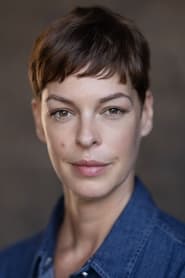
"The Woman" emerges as a hyper-structured and complex work, certainly open to multiple interpretations and capable of generating interesting debates that revolve precisely around the message that might emerge from it. Absolutely worth mentioning is the excellent performance of Pollyanna McIntosh ("Burk & Hare - Body Snatchers"), who manages the difficult task of always making her wild woman credible.
Excellent is the film's soundtrack curated by Sean Spillane, which includes a series of tracks perfectly in tune with the images that accompany them.
In short, "The Woman" is a film of great theoretical sociological value, as well as a very harsh story of madness, torture, and revenge. McKee has once again hit the mark with what is undoubtedly the most controversial film of his career so far. A must-see.
Curiosity. The novel "The Woman" by Jack Ketchum is the sequel to another of his novels, "Offspring," from which in 2009 an eponymous film directed by Andrew van den Houten was made. "The Woman" film, however, is not to be considered the sequel to "Offspring" film.
"The Woman" has recently arrived in Italy on home video after some Rai TV broadcasts, distributed by Koch Media, which has edited it in DVD and high-definition Blu-ray disc. The latter version features good video, extremely sharp, and an Italian audio track in DTS-HD 5.1. Extras are limited to the trailer only.
Comments
Comments (0)

















Comments