















The Verdict
As a child, Billy Lentz was mistreated and sexually abused by his mother until one day the child reacted and killed his mother and her lover, subsequently spending a long period of time in a psychiatric hospital. Fifteen years later, on Christmas Eve, Billy escapes from the hospital and heads towards his former home, which has now been converted into a women's dormitory for students at a nearby university.
As a child, Billy Lentz was mistreated and sexually abused by his mother until one day the child reacted and killed his mother and her lover, subsequently spending a long period of time in a psychiatric hospital. Fifteen years later, on Christmas Eve, Billy escapes from the hospital and heads towards his former home, which has now been converted into a women's dormitory for students at a nearby university. For a group of girls trapped in the dormitory due to a snowstorm, it will be the beginning of a nightmare!
Following the current trend of revisiting as many classic postmodern horror films as possible, Glen Morgan and James Wong, respectively director and producer, try again and after "Willard" (remake of "Willard and the Rats"), they propose a new version of another small classic from the 1970s: "Black Christmas". The original was directed by Bob Clark in 1974 and, although still relatively unknown (especially in Italy, where it was unavailable on any video format for decades and only recently re-released on DVD), it is a true cornerstone of the genre. "Black Christmas" 1974 version is recognized as the initiator of the "slasher" subgenre, although still immature in its characteristic formula, and has inspired the creation of several successful horror films still very popular today (think of the threatening phone calls in "Scream" and "When a Stranger Calls").
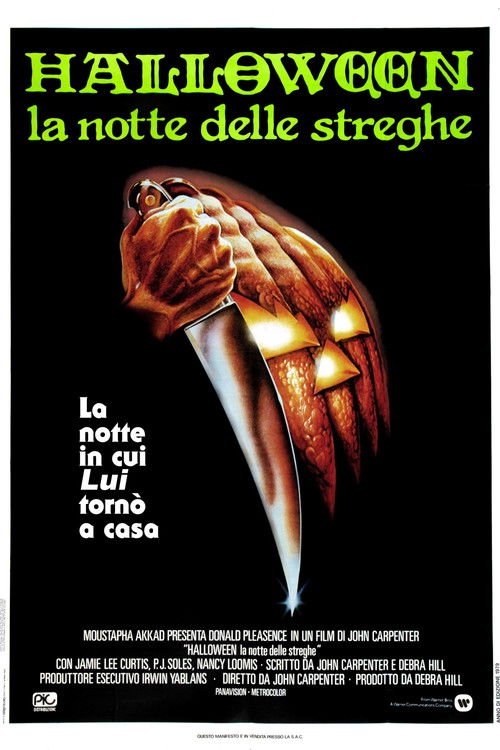
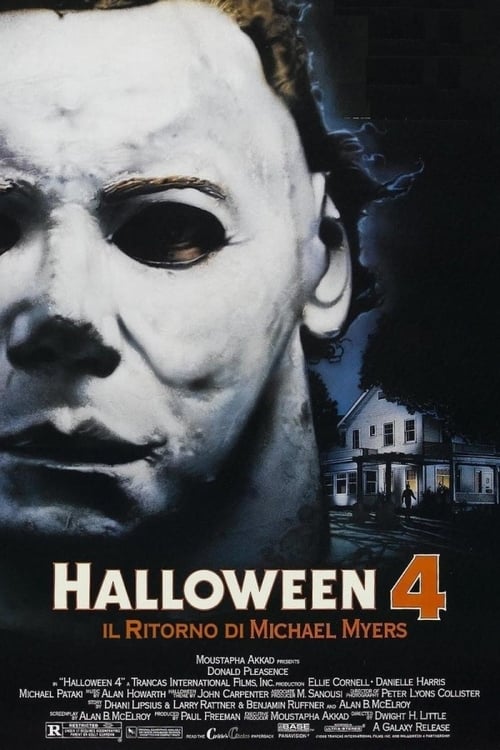
In his reinterpretation, Morgan had the brilliant idea not to uselessly retell the same story narrated by Clark thirty years earlier, but to create a completely different film that is inspired by the original only for the basic premise. Paradoxically, the director gives life to a product that owes much more to "Halloween" by John Carpenter than to the 1970s "Black Christmas", and Carpenter's film, in turn, had much in common with Clark's (an old rumor claims that "Halloween" was originally intended to be the sequel to "Black Christmas", but no one has ever confirmed this rumor). So Morgan decides to focus on what was the most enigmatic aspect of the original film, namely the figure of Billy Lentz: what in the 1974 film was an undefined figure, without face or physical features, here has a well-developed backstory and source of his madness. Through a series of well-structured flashbacks, we are shown that Billy is an unhappy child, afflicted with a rare liver disease that makes his skin yellowish; his mother mistreats him and keeps him locked in the attic like an animal, even indulging in incestuous relationships with him. Morgan tells us how the source of the boy's cruelty and madness are the result of deviant education, adding to the horror landscape a new perverse family of "monsters".
The film has a relentless pace, staging, in its one hour and twenty minutes duration, an endless sequence of extremely bloody murders mostly perpetrated against attractive students, not sparing here and there some scenes of macabre grotesqueness. However, there is a lack of originality in the choreography of the murders, which often end with the killer attacking the eyes of his victims.
The direction is very careful and even the screenplay (by Glen Morgan himself) reserves a handful of good ideas and even some well-placed plot twists, while having to adhere to the strict rules of the slasher genre and presenting some narrative gaps. The cast is also good, featuring a group of young women who have already made a name for themselves in genre productions, such as Mary Elizabeth Winstead ("Final Destination 3"; "Grindhouse - Death Proof"), Michelle Trachtenberg ("Buffy"), Katie Cassidy ("When a Stranger Calls"), Crystal Lowe ("Final Destination 3"), Kristen Cloke ("Final Destination"), and even a survivor from the original film, Andrea Martin, who sets aside the role of the student to play the part of instructor MacHenry.
It seems that Bob Clark himself, involved in the production of this remake, before his untimely death, said he preferred Morgan's film to his own, but perhaps the late director was a bit hard on himself; the 2006 version of "Black Christmas" is certainly an enjoyable slasher that knows how to entertain, but we are still far from the unease that the prototype was capable of arousing.
Comments
Comments (0)







Comments