








The Verdict
Mark and Christine are brother and sister, orphans, and entrusted to the care of their maternal grandmother. When their guardian dies, the two go to live with their aunt and uncle who own a hotel in Venice.
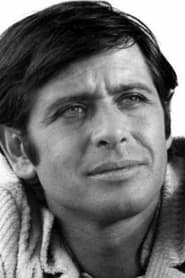
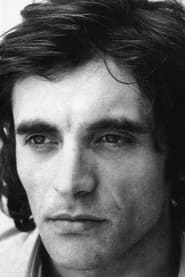
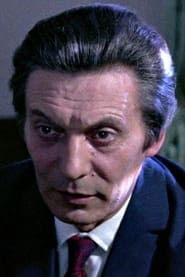
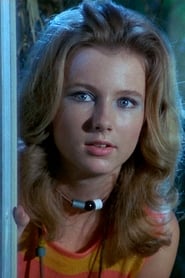
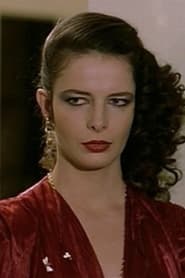
Mark and Christine are brother and sister, orphans, and entrusted to the care of their maternal grandmother. When their guardian dies, the two go to live with their aunt and uncle who own a hotel in Venice. Mark has been blind for several years but is subject to terrible visions in which he witnesses macabre scenes and omens of death, often involving a man dressed in black accompanied by a greyhound of the same color. When their aunt and uncle also die under mysterious circumstances, Christine inherits the hotel and decides to run it. One day, Mark is helped by a man whom Christine decides to host in the hotel out of gratitude. Mark, however, is against this and has the feeling that this man is the same one from his visions. Despite this, the girl falls in love with the man and becomes pregnant with him, but Mark has a bad premonition that something evil is involved in the whole situation. A bit late in capturing the wave of the demonic cinema trend popularized by international hits like 'Rosemary's Baby,' 'The Exorcist,' and 'The Omen,' 'Nero veneziano' relies heavily on atmosphere to provide the viewer eager for strong emotions with an Italian variant of Polanski's famous film released more than 10 years earlier. Ugo Liberatore, already director of 'Il sesso degli angeli' and 'Bora Bora' and here in his last film, decides to focus on the excellent location he has at his disposal: the Venice of foggy calli and gloomy alleys, which is the true unrivaled protagonist of the film. The choice is truly excellent, and Liberatore is able to give the viewer an atmosphere that alone makes the film, fascinating and macabre, capable of truly creating successful suggestions from an A-grade horror film. Indeed, if we then examine the other elements that make up 'Nero veneziano,' there is not much to shout about a miracle; rather, we find ourselves facing a product that, while dignified, was produced at the time in Italy, but for many aspects still anchored in the realm of mediocrity. Two are the major flaws of 'Nero veneziano,' the screenplay and the performances. From a subject written together with Ugo Liberatore, Roberto Gandus derives a screenplay that tries to mix many of the clichés of demonic horror, with a great predilection for 'Rosemary's Baby,' as had already been done by 'Un fiocco nero per Deborah' a few years earlier, especially regarding the protagonist's pregnancy and the climate of paranoia that hovers over the whole affair. However, in 'Nero veneziano,' a feeling of confusion immediately emerges, also discernible from the film's synopsis; there is an uncontrolled accumulation of themes, elements, characters, which then, obviously, do not manage to find equal development and explanation in the less than 90 minutes of duration. The film's screenplay seems to anticipate the narrative chaos of some of Lucio Fulci's films from the early '80s, but unfortunately, 'Nero veneziano' lacks that harmony and surreal charm of the aforementioned works, instead causing confusion and revealing narrative gaps. Furthermore, several scenes that should express dramatic intensity actually turn out to be ridiculous, and I refer in particular to some moments that flaunt Mark's blindness, shown in difficulty when he is alone with effects that, however, make you smile. And perhaps some of the blame goes to the interpreter Renato Cestié, who rose to fame with the tearjerker 'Il venditore di palloncini' (1974) and became quite famous in the '80s thanks to the series 'I ragazzi della 3°C,' here engaged in a dramatic role that perhaps does not suit him too well. In the role of the mysterious man in black, there is the Greek character actor Yorgo Voyagis, also known for 'La casa stregata' with Renato Pozzetto and 'Nosferatu a Venezia,' while in the role of the protagonist Christine, there is the effective Rena Niehaus, already the protagonist of the diptych 'La orca' and 'Oedipus orca.' In small roles also appear Olga Karlatos and Lorraine De Selle. It is interesting to see how Liberatore did not miss a good dose of brutality with a scene involving a newborn that is definitely very strong and heavily edited in all television broadcasts of the film. 'Nero veneziano' is therefore a film that constantly walks the razor's edge, in some ways fascinating and certainly successful in recreating a macabre and mysterious atmosphere, but at the same time chaotic and at times a bit ridiculous. It is still worth recovering, a testament to an era when Italy was very prolific in the horror genre, managing to rework with imagination a story already ingrained in the viewer's imagination. Available on DVD from Medusa Video and recently re-edited by CG Home Video.
Comments
Comments (0)


Comments