



















The Verdict
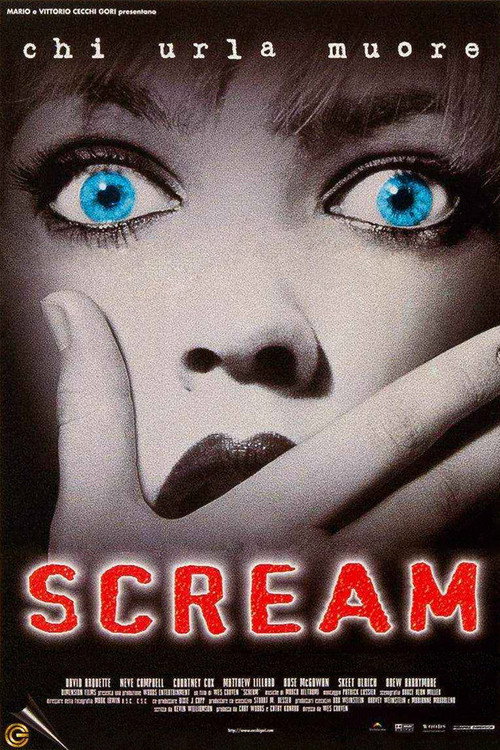
It has been 30 years since the student Casey Becker answered the phone, triggering the murderous madness of Ghostface. It was indeed 1996, and Scream hit theaters, revolutionizing the way horror-slasher cinema was perceived.
It has been 30 years since the student Casey Becker answered the phone, triggering the murderous madness of Ghostface. It was indeed 1996, and Scream hit theaters, revolutionizing the way horror-slasher cinema was perceived. However, in Italy, we had to wait until mid-1997, when the day-to-date cinema releases were still a distant goal for us to achieve.
Wes Craven's work radically redefined the approach to horror cinema, with self-awareness and a good dose of (self) irony. Almost a critical essay on film that worked on multiple levels, while still maintaining an engaging story, well-characterized characters, and some chilling moments that have remained etched in the collective imagination.
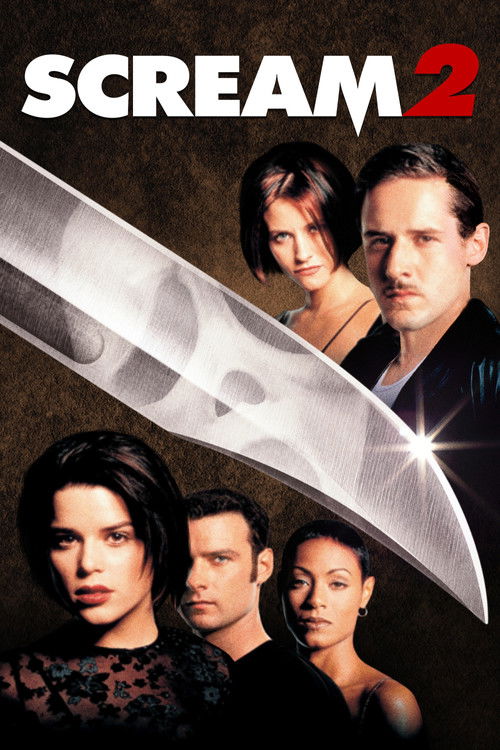
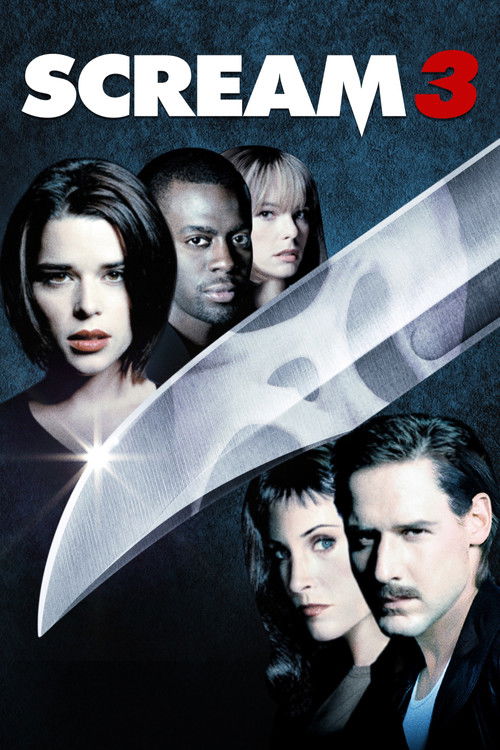
Scream is today, rightly, considered a masterpiece, one of those watershed works that mark a before and after. And as often happens in these cases, when the public's response is also positive, serialization waits around the corner. But with the Scream saga, especially for its metacinematographic value, the very existence of a slew of sequels has fueled its metafilmic work, continuing the analysis of the genre, capturing its nuances and the trends that the market itself rides. This has ensured that the overall quality level of the saga remained quite high, with chapters coherently linked to each other, following the growth—not only in age—of the characters, the audience, and the horror cinema market.
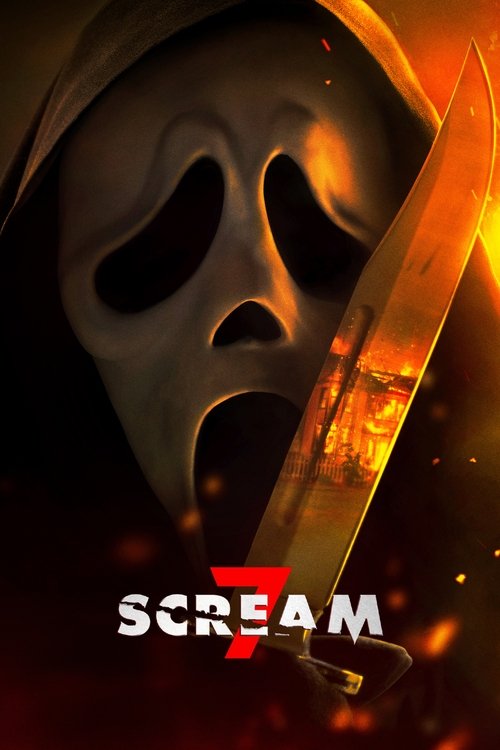
And so we have arrived at Scream 7, exactly 30 years after that first scream, with a reinvention of the franchise that had previously led to shifting the focus away from the historical characters to give space to a new generation. Yet, the fact that Neve Campbell's Sidney Prescott was not present in the sixth film seemed to some a real betrayal of intent: she, the most representative final girl of the '90s, the honorary scream queen of the last decade of the century who sets aside the role of designated victim to plunge the survivor's knife into the monster's flesh. Sidney cannot let go, Sidney cannot live "tranquilly" her maturity as a wife and mother. Sidney must return!
And so, after the requel, the legacy sequel, here we are back to the starting point: Sidney Prescott, now Sidney Evans, against Ghostface. Again.
Having moved to Pine Grove, where she runs a café, Sidney has married the local sheriff Mark Evans and had three daughters with him, the eldest of whom, the teenager Tatum, has a decidedly conflictual relationship with her, like a true rebel. When Sidney's phone rings, an anonymous number appears on the display, and the cavernous voice of Ghostface threatens her once again: for the woman, a wound she thought had healed forever reopens. Someone has found her and wants to bring her back to the center of attention, primarily threatening her family, especially Tatum. Someone who seems to know her very well.
After the departure of designated director Christopher Landon, which followed the controversial firing of Melissa Barrera and Jenna Ortega's self-removal, the initial plans for Scream 7 have radically changed with the need to rewrite the screenplay from scratch, completely altering the subject. And so, the decision was made to return to the origins with the entry of Kevin Williamson as director. Williamson, the very creator of the saga in the '90s alongside Wes Craven, the man who wrote the screenplay for the first iconic film and the second and fourth installments, but also the screenwriter of I Know What You Did Last Summer, The Faculty, Cursed, director of the small cult today forgotten Killing Mrs. Tingle, and creator of that generational phenomenon titled Dawson's Creek. In short, the right man to bring Sidney Prescott, the original final girl, back to the center of the story.
Scream 7 opens with a (beautiful) sequence set in the house of Stu Macher, one of the two killers from the first film—also featured in Scream 3 (reconstructed in a film set) and the scene of the final massacre in Scream 5—here turned into a stylish bed & breakfast experience for true crime lovers. An opening that seems to be a declaration of intent: the destruction of the past, literally set on fire, the negation of the nostalgia effect itself. A paradox, given that a moment later we relive, like in a philological remake, one of the iconic scenes from the first Scream: same music, same shots, same dialogues. I won't deny that a shiver ran down my spine. And then she enters the scene, a stunning Neve Campbell, aka Sidney Prescott, whom we thought had finally retired to enjoy her "retirement" peacefully. But as Jamie Lee Curtis, aka Laurie Strode, teaches us, a final girl is forever.
And it is precisely on this role that Scream 7 reflects, as it abandons its explicitly cinephile value (confined to the initial sequence and a few lines from Mindy Meeks-Martin) and gains an implicitly metacinematographic one.
The focus of the entire story is Sidney Prescott, but not the ex-girlfriend of Woodsboro who survived multiple massacres and tries to rebuild her life—that is a purely narrative detail. Rather, we are talking about Sidney as an archetype, the primordial model from which to start to reach the stereotype. When in 1992 Carol Jeanne Clover coined the term "final girl" in the book Men, Women, and Chain Saws: Gender in the Modern Horror Film, she unknowingly had Sidney Prescott in mind, who is nothing more than the evolution of the various Sally, Laurie, Alice, Nancy. Sidney is the redefinition of the archetype itself, the first final girl since this term has been part of popular culture.
In Scream 7, the reflection becomes much more subtle than in the past, and Williamson plays on at least two levels: the more metaphorical one, which is an integral part of the franchise itself, and the surface one. The first, the "meta" one, is of such finesse and coherence that it deserves a bow, but it requires a predisposition of the viewer to analysis; the second is not up to it, although it shows a dignity that many other sequels and franchises can envy.
Let's now focus on the more superficial level, namely the story and the mystery it builds.
In some ways, Scream 7 is a very classic thriller/mystery, but in the postmodern sense of the term (forgive the oxymoronic paradox). That is, it does not build a whodunit à la Agatha Christie, there is no Poirot looking for logic in the characters' actions, but rather that brazenness of a certain Italian giallo of the '70s, where suggestion and plot twist prevailed over everything else. In this, it also differs from previous Screams, especially in the revelation of Ghostface's identity. And if you stop only at the surface of the film, this choice, the motive in particular, might even disappoint you precisely because it requires the superimposition of that more meta-narrative level discussed above. After all, they say it right in the film that the "simplest" solution would have been the admission of surrender.
In short, Williamson and co-screenwriter Guy Busick have crafted a much more elaborate work than it might apparently seem.
Let's talk about the characters. We already know Sidney Prescott, Gale Weathers, and the Chad and Mindy brothers; then there is a series of cameos by historical characters (dead), but we won't reveal the "how" and the "why"; finally, we have the new entries. Mostly inserted to fuel the pool of "victims" and "suspects" (among them the familiar faces of McKenna Grace, Asa German, and Joel McHale), with the exception of Tatum, Sidney's daughter played by Isabel May, a potential victim, a potential killer, but above all a daughter. Tatum is the new generation directly connected to the previous one, but not like Jill Roberts in Scream 4 or Sam Carpenter in Scream 5 and 6. The generational conflict is the one that can realistically exist between a daughter and a mother, where the latter wants to break the former's iron rules just for the sake of doing it, precisely because they are rules. But Tatum is not just a rebellious teenager, she is also a girl who feels too much distance from her mother, she misses the complicity she could have with a mother: very simply, she misses the story of her mother's adolescence. Because, as Sidney says, everyone knows her past thanks to films and books, but she tends to deny it, she would like to forget the trauma, a trauma that can instead paradoxically be useful for her daughter to face the present, her adolescence.
It is very beautiful and profound the relationship they have created between Sidney and Tatum, and indeed the film itself focuses a lot on it, rightly, bringing forward a discussion about inheritance closely linked to the entire "meta" discussion addressed by the film.
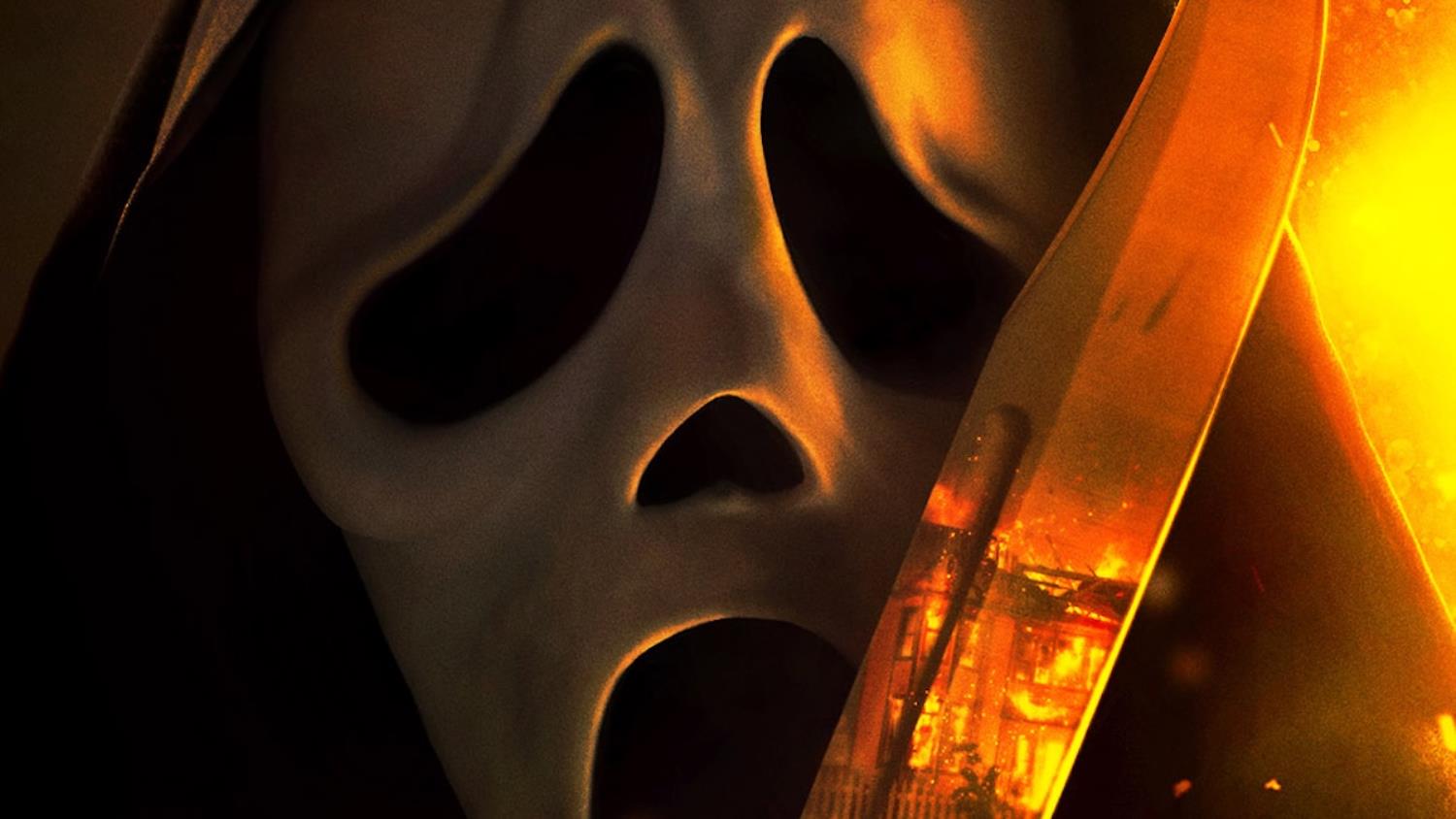
Last but not least, Ghostface. In Scream 7, we see a particularly sadistic Ghostface, who performs ambushes, chases, and fights with a clearly action-packed soul, but when he plans the murders, he goes all out, up to the climax of a killing that seems executed directly by Jason Voorhees in a chapter of Friday the 13th, so brutal and sensationalistic. When you see it, you will understand.
So, Kevin Williamson has certainly done a good job, especially playing with the reading levels of Scream 7, avoiding with great skill all those pitfalls that this chapter could have offered on a silver platter; in fact, on a couple of occasions, he even manages to make us laugh. And arriving at the 7th chapter of such a beloved saga, it was not at all obvious to keep the quality high; even historical horror sagas, which Scream openly draws inspiration from, have not arrived "intact" to this number after the title.
Comments
Comments (0)
















Comments