


















The Verdict
In 2174, Earth is on the brink of collapse, resources are minimal, and the population is ever-growing. The destination to continue the human species is Tanis, a planet very similar to Earth, towards which the ship Elysium has been sent with a large number of people, animals, and plants on board.
In 2174, Earth is on the brink of collapse, resources are minimal, and the population is ever-growing. The destination to continue the human species is Tanis, a planet very similar to Earth, towards which the ship Elysium has been sent with a large number of people, animals, and plants on board. Lieutenant Payton and Corporal Bower wake up from cryogenic sleep to perform their shift in the long journey to Tanis, but they realize that something is wrong on the Elysium. The immense spaceship seems uninhabited and abandoned for a long time, and they barely remember their mission due to the side effects of hibernation. While Payton remains in the command cabin, Bower proceeds to explore the ship, heading towards the reactor room, but soon realizes that they are not alone on the ship; there is also a pack of creatures hungry for human flesh.
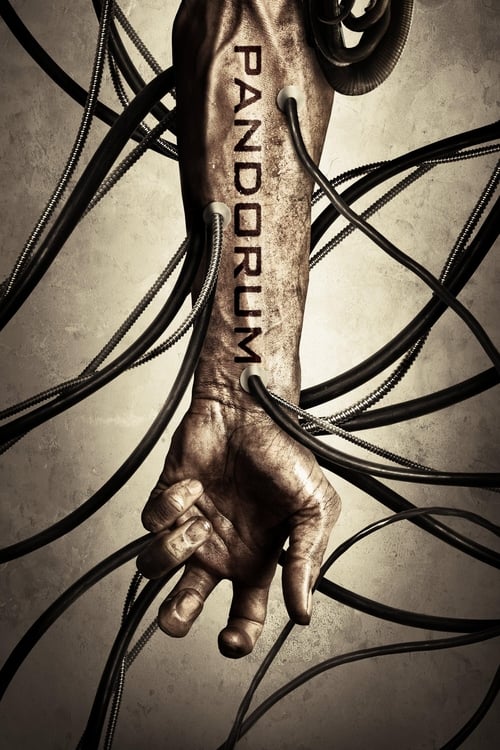
If once films that tell of horrors and spaceships were common thanks to the worldwide success of "Alien," today they are a rarity. Looking for recent productions in the science fiction genre that set the action in space and delve into horror suggestions, one has to go back to 2007 and "Sunshine" by Danny Boyle; one realizes that, despite the world of video games having the success of a masterpiece like "Dead Space," the current cinematic landscape is particularly poor in "space" sci-fi-horror. Amidst so much desolation comes "Pandorum – The Parallel Universe" by German director Christian Alvart ("Case 39"), one of those gems that were needed, a perfect mix of terror, action, suspense, and plot twists.
The Pandorum syndrome, also known as orbital dysfunction syndrome, frequently mentioned during the film and which gives the title to the work, indicates a pathological state that can be reached by humans in the face of the sense of confusion, loneliness, and isolation that can be experienced in deep space. The entire film revolves around this concept.
Corporal Bower, played by a skilled Ben Foster ("Alpha Dog"; "30 Days of Night"), wakes up from a cosmic sleep lasting eight years, is confused and has no memory, immediately realizes he is isolated in space, probably in danger, and his first reaction is to search for someone to share his fear and perhaps get some clarification. There is no one apparently, at least no one alive or conscious. Loneliness. The ability of director Alvert and screenwriter Travis Milloy lies in making the viewer immediately part of the story, providing only Bower's point of view, thus depriving them of additional information that could give them an advantage over the character. The viewer is there, on the Elysium, just waking up from an eight-year sleep and tearing the tubes from their veins next to Bower. The viewer is Bower. The elements that make the story of "Pandorum" concrete are added little by little until they form Bower's memories and the truths hidden in the corridors of the Elysium. The emotional involvement is effectively conveyed, the exclusion of omniscience brings the viewer closer to the story and significantly charges every revelation.
The management of time, the alternation of genres, and the placement of plot twists are praiseworthy. The film, despite its considerable length of 108 minutes, has a very tight pace, practically devoid of dead time, thanks to the skillful dosage of information given to the viewer and the alternation between action and more reflective moments. "Pandorum" is a definitely complete film, capable of engaging thanks to an original and gripping plot in which interesting characters act, and, for once, not stereotypical despite being classic in style. The screenplay of the almost debutant Millory is certainly constructed keeping in mind Vogler's lesson and his seminal "The Hero's Journey." Bower is the hero catapulted into a disorienting situation and continuously subjected to trials. In the three canonical acts, he faces nemeses and meets helpers until he reaches the prize, naturally passing through the confrontation with the "final boss." We can also use the video game language because it is clear that the structure of "Pandorum" is not based only on the ABC of screenwriting but also on the construction in "levels" dear to video games. Explore the environments, find a way out, wield a weapon, and face numerous enemies. Not surprisingly, we recognized the Electronic Arts video game "Dead Space" as one of the highest peaks recently reached by the sci-fi-horror genre in the cultural industry.
Classics and modernity alternate in "Pandorum," a film that is nevertheless well anchored to works of the past, more or less distant.
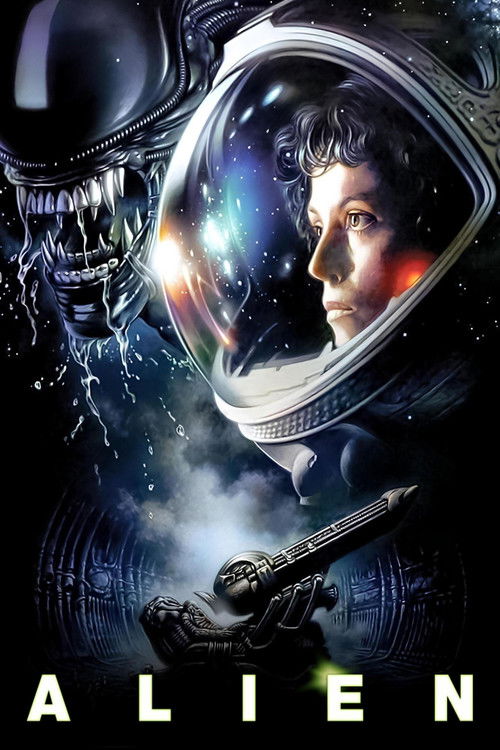
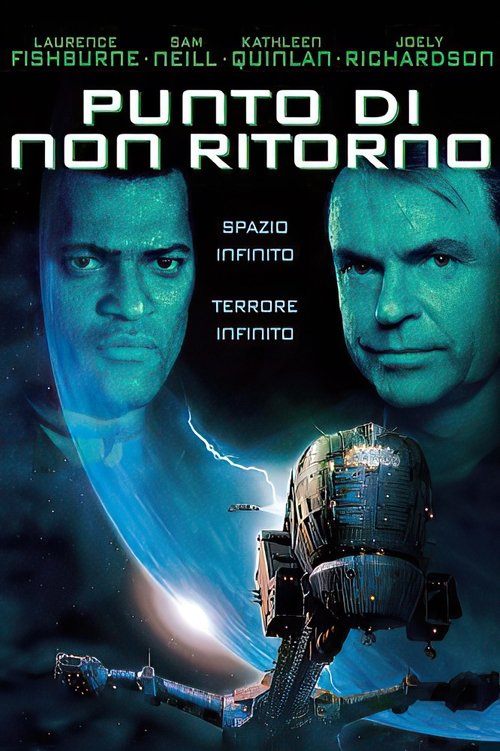
If "Alien" is a fundamental starting point, influences and explicit references can also be found to Carpenter's "Ghosts of Mars" and the neo-classic "The Descent," especially for the look and modus operandi of the creatures infesting the spaceship, repulsive humanoids who boast metal implants, hunt in groups, and love to root around in the filth and grime in foul piles of glabrous and slimy bodies. Another film that is impossible not to think of in reference to "Pandorum" is "Event Horizon – Point of No Return," directed by Paul W. Anderson in 1997; and not surprisingly, we find the same Anderson among the producers of Alvert's film.
Some flaws here and there are also present in "Pandorum." Some scenes are excessively dark, especially in the first part, making some movements practically incomprehensible, a similar problem for some action sequences, so hectic and fast as to create visual confusion. These are, however, details, trifles that can be overlooked when dealing with a film that is nevertheless memorable and absolutely appreciable.
Recommended.
Comments
Comments (0)














Comments