



The Verdict
The director of a department store approaches Yuka, one of his young saleswomen, to spend a night of love. Once in his apartment, after an initially passionate beginning, the man reveals his true nature by unleashing all his misery on the unfortunate woman.
The director of a department store approaches Yuka, one of his young saleswomen, to spend a night of love. Once in his apartment, after an initially passionate beginning, the man reveals his true nature by unleashing all his misery on the unfortunate woman. For her, a never-ending ordeal will begin.
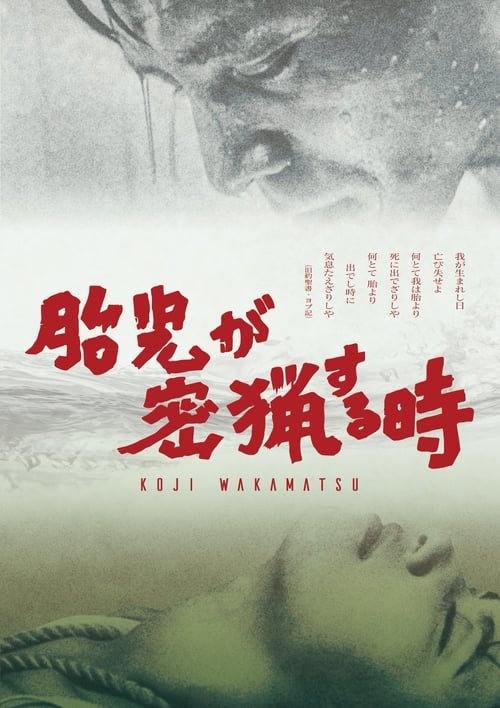
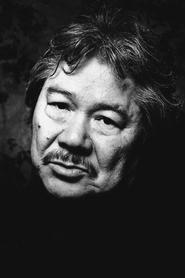
“Perish the day I was born! Why was I not dead in the womb? Why did I not expire as soon as I left the womb?” (Book of Job): this is the opening that introduces us to a hallucinatory journey where our guide is Koji Wakamatsu, one of the pioneers of the Pinku Eiga (erotic-softcore) genre, a definition certainly reductive and that only reveals one of the many nuanced aspects characterizing “The Embryo Hunts In Secret” (which translated into Italian means “When the embryo poaches”).
With a stormy past behind him, which saw him affiliated with the yakuza, the Japanese director began his long and prolific film career in 1963 and then founded, a few years later, the independent production company “Wakamatsu Production”, debuting with the film in question (“Taiji ga mitsuryo suru toki” is the original title). Although the film is a concentration of sadism and exploitation, it is far removed from the brutal and bloody oriental productions (“Guinea Pig”, “Men Behind The Sun”, to name a few among the most famous) not only in terms of timing but also in conceptual and stylistic terms. In this case, we are indeed faced with a work imbued with a high-level intellectual cinematic language, which aims to probe the fragile psyche of a man tormented by a past that violently dominates his present. The plot revolves around the marital vicissitudes of the protagonist (presented to us through a series of flashbacks) who, exasperated by his wife's continuous and insistent requests to have a child, imposes his categorical refusal with force. The wife then resorts to artificial insemination, an act perceived by the husband as a serious act of betrayal against him.
This is the triggering event exploited by Wakamatsu to express his nihilistic vision, a mirror of the traditional pessimistic approach to life that characterizes part of Japanese culture, but also that of classical Greece (the poet Bacchylides wrote: “Never to be born: this would be the fortune of fortunes for man, not to exist, not to see the sun”). The protagonist, constantly grappling with philosophical musings, interprets life as the manifestation of pain in its purest and fiercest state, so merciless as to condemn the human being the very moment he sees the light outside the maternal womb (paradise) and settles against his will in a world (hell) that reserves only suffering and despair for him. In Yuka, the man sees the incarnation of his ex-wife, as well as the perfect fetish guinea pig to re-educate according to his mad standards. Torn between the desire to shape a new ideal wife and the desire for revenge that consumes him day by day, the man will inflict all kinds of physical and psychological torture on the young woman: guided by a strong misogynistic instinct, he will vent his repressed anger by punishing Yuka for her natural condition as a woman, with all the unfortunate consequences that derive from it (carnal pleasure, motherhood), in an attempt to purify her. But the man's instability has deeper and more rooted origins, traceable to unresolved childhood traumas, linked to an Oedipal situation that leads him to a quasi-pathological identification of any female subject with the mother. If, to the eyes of the viewer, the man's mental balance appears precarious and deviated, in the abyss of his infernal microcosm the irrationality of his actions finds confirmation in the humanistic belief to which he is faithfully consecrated: in the senselessness of his convictions, everything makes sense.
In a bare apartment, without too many stylistic mannerisms but with a skillful and clever use of chiaroscuro and sound, Wakamatsu stages this heart-wrenching existential drama, where the protagonist's inner conflicts come to life through brutal sequences of violence, made even more cruel by the classical musical background, interspersed with compassionate scenes of sweetness, eroticism, and adoration for the victim.
The concept of “extreme” in this film should be embraced 360°: extreme are the material circumstances in which the girl finds herself, tied, submissive like a dog, repeatedly whipped and deprived of dignity, and even more extreme are the reflections that follow, which transcend the very meaning of life and the conception of the world as commonly understood.
The choice to use a single location and only two actors is functional to the oppressive and claustrophobic context in which the entire story unfolds, with great and painful slowness. With great foresight, Wakamatsu gives birth to what many – rightly – define as a true masterpiece: subversive, courageous, surreal, and so powerful in its lucid madness that it pierces the screen. “The Embryo Hunts In Secret” is a visual and deeply introspective experiment dominated by a strong emotional connotation. The absolute and visceral sense of negation directs the threads of this story where the minds of the characters – both victims not fully aware of their natural/social status – are brutally raped and led into a dissonant dimension stripped of every ethical value.
A hard film in form and substance, perfect and shocking representation of the poetic vision of one of the most significant and peculiar directors of extreme Eastern cinema.
Review originally published on the M’illumino di Horror blog
Comments
Comments (0)





Comments