




The Verdict
Soavi doesn't simply film murders—he stages death as theatrical spectacle. Every corridor, set piece, and catwalk above the stage becomes part of a sprawling theatrical labyrinth where actors gradually stop performing and start fighting for survival.
Soavi doesn't simply film murders—he stages death as theatrical spectacle. Every corridor, set piece, and catwalk above the stage becomes part of a sprawling theatrical labyrinth where actors gradually stop performing and start fighting for survival. The line between show and reality dissolves entirely. It's as though the killer isn't trying to eliminate victims, but orchestrate his own macabre production.
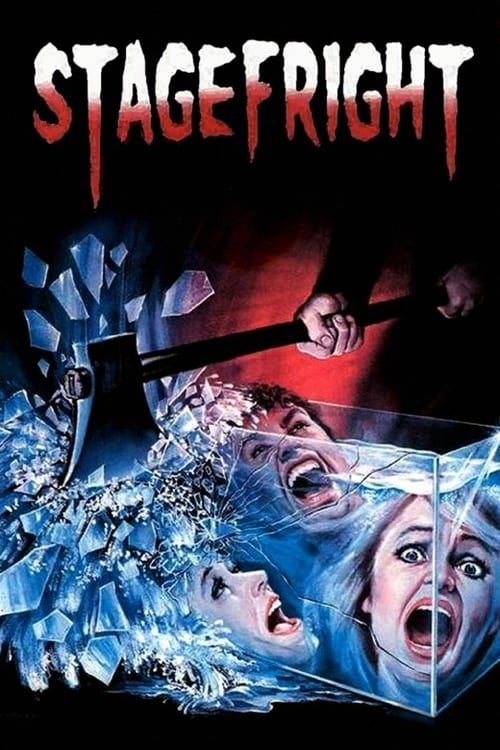
The masterstroke remains that iconic owl mask. In an era dominated by instantly recognizable faces like Jason Voorhees and Michael Myers, Soavi opts for an animal visage—impassive and almost sacred. That owl doesn't radiate rage or sadism; it watches. It embodies a twisted spectator savoring the massacre as high art. Several American horror critics have noted how this single image lodged itself deeper in their minds than the plot itself.
Unlike many American slashers of the period, Deliria refuses to court sympathy for its characters: the theater company members are often selfish, neurotic, and cutthroat. Soavi seems to argue that the true monster isn't just the serial killer, but showbusiness itself—an ecosystem where everyone will sacrifice someone else to keep the show running. The theatrical director Peter Collins becomes an almost savage caricature of the artist willing to compromise anything for success.
Visually, the film is stunning, thanks to masterful chromatic lighting, fluid camerawork, and deep spatial composition that clearly echo Dario Argento's best work, though Soavi already demonstrates a distinct voice. Where Argento chases abstract nightmare, Soavi constructs a geometry of confinement: locked doors, missing keys, hallways that never seem to end. The theater setting isn't mere backdrop—it's the story's true protagonist.
What resonates today is its prescience. Many contemporary slashers play with meta-cinema and genre-aware commentary. Deliria was doing this in 1987, without fanfare. The film concerns people staging a killer's performance, only to find themselves trapped in their own fiction. It's a slasher that reflects on the slasher itself.
If there's a weakness, the screenplay doesn't always match the ambition of the direction. Some characters feel underdeveloped, and certain plot decisions strain credibility even by genre standards. Yet, as several American reviewers observe, Soavi's visual command nearly always compensates for narrative shortcomings.
Ultimately, Deliria transcends being merely a solid Italian horror film—it's a meditation on the power of the gaze, the cruelty of spectacle, and the blurred boundary between observer and observed. When the curtain falls on corpses arranged like grim set dressing, you realize the true performance wasn't the musical the actors rehearsed, but the one orchestrated by the killer. And perhaps by Soavi himself (who would later direct the equally cult La Chiesa), proving with his debut that a simple slasher could be transformed into a haunting reflection on the theater of death.
Highly recommended!
Comments
Comments (0)










Comments